
News
Connectivity is evolving rapidly, and 5G together with mmWave is reshaping how vehicles, infrastructure and digital platforms interact. Modern mobility is no longer just about autonomous vehicles, but about constant data exchange between cars, roadside systems and cloud services. This approach, often described as connected and cooperative mobility, aims to improve safety, traffic efficiency and the overall travel experience.
To function reliably, this new mobility model depends on stable wireless communication and data platforms that support real-time decisions, large data volumes and AI-based services. As connected vehicles and V2X applications continue to scale, 5G becomes a practical foundation for data-driven mobility services across multiple industries.
WHAT MAKES 5G SUITABLE FOR MODERN MOBILITY
5G differs from earlier mobile network generations in several important ways. Ultra-low latency, high bandwidth and strong reliability allow mobility services to respond in real time. These characteristics support use cases such as cooperative driving, collision prevention, dynamic route planning and remote vehicle support.
Continuity of service is especially important when vehicles operate across regions or national borders. Cross-border trials, including initiatives like 5G-ROUTES, show that 5G can maintain stable connectivity across different mobile networks and regulatory environments. This makes 5G a key enabler for interoperable and resilient mobility systems rather than just a faster communication layer.
BEYOND PASSENGER CARS: WHERE 5G CREATES VALUE
Although automated mobility is often linked to passenger vehicles, the impact of 5G extends much further. High-performance wireless connectivity supports a wide range of sectors where real-time data exchange is critical.
In transport and logistics, 5G enables connected freight corridors, vehicle coordination and real-time tracking. In urban environments, it supports smart traffic management, adaptive intersections and better coordination between private vehicles, public transport and pedestrians. Combined with edge computing, data can be processed close to its source, helping cities reduce congestion and improve traffic flow.
Industrial environments also benefit from 5G. Manufacturing plants, ports and logistics hubs use it to connect robots, automated guided vehicles and monitoring systems. Reliable, low-latency communication allows precise coordination, while private 5G networks provide secure connectivity for industrial operations.
CRITICAL SERVICES AND DATA-DRIVEN OPERATIONS
In sectors where reliability is essential, 5G plays a key supporting role. Healthcare and public safety services rely on stable communication for remote monitoring, emergency coordination and mission-critical operations. In the energy sector, 5G supports smart grid management, predictive maintenance and the integration of distributed energy resources. Agriculture benefits from connected sensors, autonomous machinery and data analytics that improve productivity and resource efficiency.
Media and broadcasting are also evolving with 5G and mmWave. Live video, immersive content and augmented reality services become more flexible and scalable, particularly in dynamic environments such as live events and smart venues.
FROM CONNECTIVITY TO DIGITAL PLATFORMS
Across all these use cases, 5G acts as a catalyst for data-driven innovation. High-speed and low-latency connectivity enables real-time monitoring and analytics, AI-based optimization, digital platforms that connect vehicles and infrastructure, and personalized mobility services.
WHY LOCATION DATA STILL MATTERS
While 5G enables real-time communication, geospatial data provides the context that makes connected and automated mobility possible.
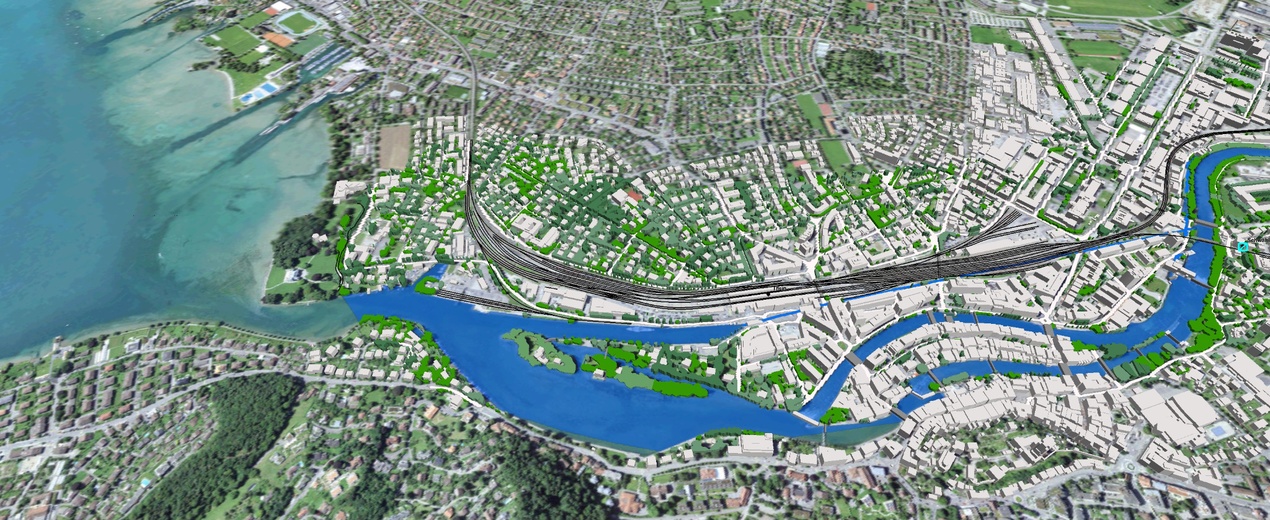
boodmoe LLC, in partnership with Visicom, delivers high-quality 2D, 2.5D and 3D geospatial datasets, including road networks, terrain models, land cover, clutter and detailed urban environments. This data is used for high-definition mapping, V2X applications, radio network planning, and simulation of automated mobility scenarios.
LOOKING AHEAD
By combining telecom-grade geospatial data with advanced 3D modelling, boodmoe and Visicom contribute to the development of reliable and interoperable CCAM ecosystems, supporting transport, logistics and urban mobility initiatives.
Contact us [email protected] for more details, free samples and case studies.